

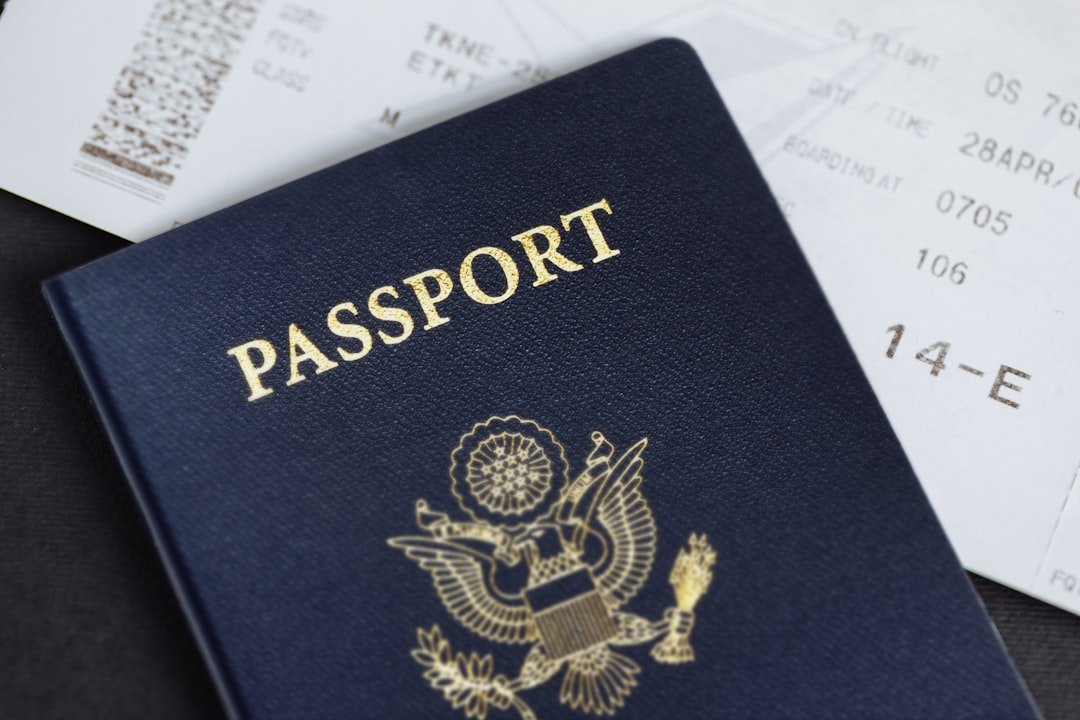
The CPF: Your Golden Ticket to Standing in More Lines
Here is the thing about Brazil that catches everyone off guard. You cannot do anything, and I mean anything, without a CPF. That is your Cadastro de Pessoa Fisica, a tax identification number that functions as your universal key to Brazilian society. Want a phone plan? CPF. Internet at your apartment? CPF. Buy something online? CPF. Open a bank account, sign a lease, register for the gym, get a loyalty card at the pharmacy… CPF, CPF, CPF, CPF.
The good news is that getting one has gotten easier. You can apply at any Correios (post office), Banco do Brasil, or Caixa Economica Federal branch with your passport and a proof of address. If you are still abroad, Brazilian consulates handle it through the e-Consular system for free. The number itself usually comes through within a few days.
But here is where it gets fun. Since January 2026, the Receita Federal tightened the rules. You now need to submit a photo of yourself holding your identification document (face and ID both clearly visible), and if you are already in Brazil, proof of legal entry is mandatory. No more showing up with just a passport and a smile. And if your documents were not apostilled before you left your home country? That is a whole other adventure we will get to in a minute.
The real frustration is not getting the CPF. It is the chicken-and-egg problem it creates. You need a CPF to get a phone number. You need a phone number to verify your identity for online services. You need those online services to schedule appointments at government offices. See where this is going? My advice: get the CPF sorted before you even board the plane. Apply through the consulate in your home country, arrive with it already in hand, and skip the first loop of the bureaucratic carousel.

Federal Police Registration: The CRNM Waiting Game
Once you have got a visa that lets you stay beyond tourist status, your next stop is the Policia Federal. Every foreign resident in Brazil must register within 90 days of arrival to receive their CRNM (Carteira de Registro Nacional Migratorio), which is basically your Brazilian ID card as a foreigner. Miss that window and you are looking at daily fines under the 2025 rules, and the clock does not care that you did not know.
The process itself is fully digital now, which sounds great until you learn what that actually means. You file everything through the government portal, upload your documents, pay the GRU (a federal fee, currently around R$204.77 for most categories), and then… you wait. The official processing estimate? Up to 180 days. Six months. Half a year of your life where your primary ID is a protocol receipt printout.
In practice, it often takes around 30 to 45 days. But backlogs happen. In 2024, the system got so jammed that over 160,000 immigrants were stuck waiting for their cards. The Federal Police and their card-printing contractor had to create a special task force just to clear the queue. If the system goes down (it does), there is no paper backup, no walk-in alternative. You just wait.
During that waiting period, you are technically a legal resident but with limited ability to prove it. Some banks, landlords, and even employers get skittish when all you can show is a receipt and a prayer. Carry your passport everywhere and keep a printout of your protocol number on you at all times. It is the closest thing to a security blanket the Brazilian bureaucracy offers.
Opening a Bank Account: Brazil’s Favorite Catch-22
I could probably write an entire book just about this. Opening a bank account in Brazil as a foreigner is one of those experiences that makes you question whether the universe is fundamentally hostile.
Here is the deal. The major banks (Itau, Bradesco, Banco do Brasil, Caixa Economica Federal) technically allow foreigners to open accounts. But “technically” is doing Olympic-level heavy lifting in that sentence. You will need your CPF, your CRNM (or at least the protocol), proof of Brazilian income, proof of address, and sometimes a letter from your employer. If you work remotely for a foreign company and do not have Brazilian income? Several banks will flat-out refuse you. One branch might say yes, the next branch of the same bank might say no. There is no consistency, and the branch manager’s mood on a Tuesday might be the deciding factor.
The proof of address requirement is particularly frustrating when you think about it. You need a utility bill in your name from the last 90 days. But you just moved here. You do not have utilities in your name yet because you cannot sign a lease without a bank account, and you cannot get a bank account without proof of address. It is a circular loop of bureaucratic requirements, and nobody seems to notice.
Your best bet? Digital banks have changed the game. Nubank accepts foreigners with just a CPF and RNM. Wise lets you hold reais without any Brazilian documentation at all. BTG Pactual and Banco Rendimento also work with non-resident accounts (called CDE, Conta de Domiciliado no Exterior). Start digital, get your financial footprint established, and then approach a traditional bank once you have statements and proof of address to wave around.
Renting an Apartment: The Fiador Problem
So you have found the perfect apartment. Great neighborhood, good price, decent natural light, the works. Then the real estate agent asks for your fiador.
A fiador is a guarantor, someone who personally guarantees your rent. Not with a deposit, not with insurance, but with their own financial life. The fiador must earn at least five times the monthly rent AND own property in the same city. In Sao Paulo or Rio, where rents are steep, that means your guarantor needs to be pulling in serious money and holding real estate locally. For an expat who just arrived and might know exactly zero people who fit that description… you can see the problem.
Some landlords and agencies will not even consider a foreigner without a fiador. Others will work with alternatives, but those come with their own costs. Seguro-fianca (rental insurance) typically runs one to two months’ rent per year, paid upfront. A titulo de capitalizacao (capitalization bond) locks up a lump sum, which you theoretically get back at lease end. A deposito caucao (security deposit) of up to three months’ rent is another option, but not all landlords accept it.
Platforms like QuintoAndar have been a game-changer here. They handle the guarantee internally, so you do not need a fiador at all. You still need income documentation and a CPF, but the bar is significantly lower than the traditional agency route. For furnished short-to-medium-term rentals while you get settled, Airbnb and direct-with-owner deals on Facebook groups (search “[your city] + aluguel” or “alugar apartamento”) are how most expats survive the first few months.
Converting Your Driver’s License: More Than a Trip to the DMV
Your foreign driver’s license is valid in Brazil for 180 days from your entry date. After that, you need a Brazilian CNH (Carteira Nacional de Habilitacao), and the conversion process is… well, it is a process.
If your country has a bilateral agreement with Brazil (most of Europe, the US, Canada, Japan, and several others do), you can convert without taking a driving test. You will still need your CRNM, CPF, a sworn translation of your license (traducao juramentada, which costs around R$200-400), a medical exam (exame de aptidao fisica e mental), and for some categories, a psychological evaluation and toxicology test. Each state’s DETRAN runs its own version of this procedure, so the specific requirements and wait times vary depending on whether you are in Parana or Pernambuco.
If your country does not have an agreement with Brazil? Add a practical driving test to the list. Yes, even if you have been driving for 20 years. And you will need to schedule it through the DETRAN, which in some states has wait times measured in months, not weeks.
The whole process takes roughly 30 to 60 days when everything goes smoothly. My recommendation: start the conversion the week you get your CRNM. Do not wait until your 180-day grace period is about to expire, because one scheduling delay at the DETRAN and suddenly you are driving illegally.
The Cartorio-Apostille-Translation Triangle
This one deserves its own section because it trips up almost everyone, and understanding it will save you weeks of frustration.
Every foreign document you plan to use in Brazil (birth certificate, marriage certificate, university diplomas, criminal background checks, professional licenses) must go through three steps before any Brazilian institution will even look at it:
- Apostille in your home country. Under the Hague Convention (which Brazil joined via Federal Decree 8.860/2016), documents must carry an apostille stamp from the competent authority in the country where they were issued. You cannot do this in Brazil. You must do it before you leave, or have someone back home handle it for you. Miss this step and you are shipping documents back and forth internationally, which is as fun and fast as it sounds.
- Sworn translation in Brazil. A traducao juramentada must be done by a translator officially registered with the Junta Comercial (Board of Trade) of a Brazilian state. Not a freelance translator, not Google Translate, not your bilingual friend. An officially certified sworn translator. This costs anywhere from R$200 to R$1,000+ per document depending on complexity and length.
- Registration at the Cartorio. The cartorio (notary office) registers the foreign document and its translation, giving it legal standing in Brazil. This adds another fee (varies by state) and another trip to stand in another line.
For a married couple moving to Brazil with university degrees, the document chain alone (two birth certificates, a marriage certificate, two diplomas, two background checks) can easily cost R$3,000-5,000 in translation and notarization fees, take 2-4 weeks to complete, and require multiple trips to different offices. Plan for it, budget for it, and most importantly, get your apostilles before you leave your home country. That single step eliminates the most painful bottleneck in the entire chain.
The Good News: What Is Actually Easy
It is not all cartorio lines and bank rejections. Some things in Brazil are surprisingly smooth.
Healthcare (SUS): Brazil’s public healthcare system is free for everyone, including foreigners, regardless of visa status. Registration takes about 15 minutes at your local UBS (Unidade Basica de Saude). Bring your CPF and passport, and they will issue your Cartao Nacional de Saude on the spot. No waiting period, no insurance premiums, no co-pays. The quality varies (big cities tend to be better), and wait times can be long for non-emergency care, but for a free system that covers everything from vaccinations to surgery… it is genuinely impressive.
Phone and internet: Once you have a CPF, getting a prepaid SIM is trivial. Walk into any carrier store (Vivo, Claro, TIM), hand over your CPF and passport, and walk out with a working number in 20 minutes. Postpaid plans usually require a CRNM, but prepaid gets you connected immediately. Home internet installation through providers like Vivo Fibra or Claro is similarly straightforward once you have a proof of address.
The despachante: Brazil has an entire profession dedicated to navigating bureaucracy on your behalf. A despachante is essentially a professional bureaucracy handler. They know which window, which form, which stamp, and which line you need at any given government office. For vehicle registration, license conversion, immigration paperwork, property transactions… a good despachante is worth every centavo. The fact that this profession exists and thrives tells you everything you need to know about Brazilian bureaucracy, but also that there is a well-worn path through the maze.
The Bottom Line
Moving to Brazil is absolutely worth it. The country is extraordinary, the people are warm, the cost of living is competitive, and the quality of life (once you are set up) is hard to beat. But the setup phase is a gauntlet. The bureaucracy is not malicious, it is just… thorough. Very thorough. Thoroughly thorough.
The expats who have the smoothest transitions are the ones who prepare their documents before they leave, arrive with a CPF already in hand, budget both time and money for the translation-apostille-cartorio circuit, and are not afraid to hire a despachante when the system gets thick. Trying to figure it out alone is possible, but it is like assembling furniture without instructions, in Portuguese, while someone periodically changes the screws.
If you are planning a move to Brazil and want someone to walk you through the entire process from visa strategy to boots-on-the-ground setup, that is exactly what we do at Flare International Solutions. Reach out and let us make sure you arrive prepared, not panicked.
—
Immigration policies change frequently. The information in this article reflects requirements as of May 2026. Always verify current requirements with official government sources or a qualified immigration professional before making decisions.