
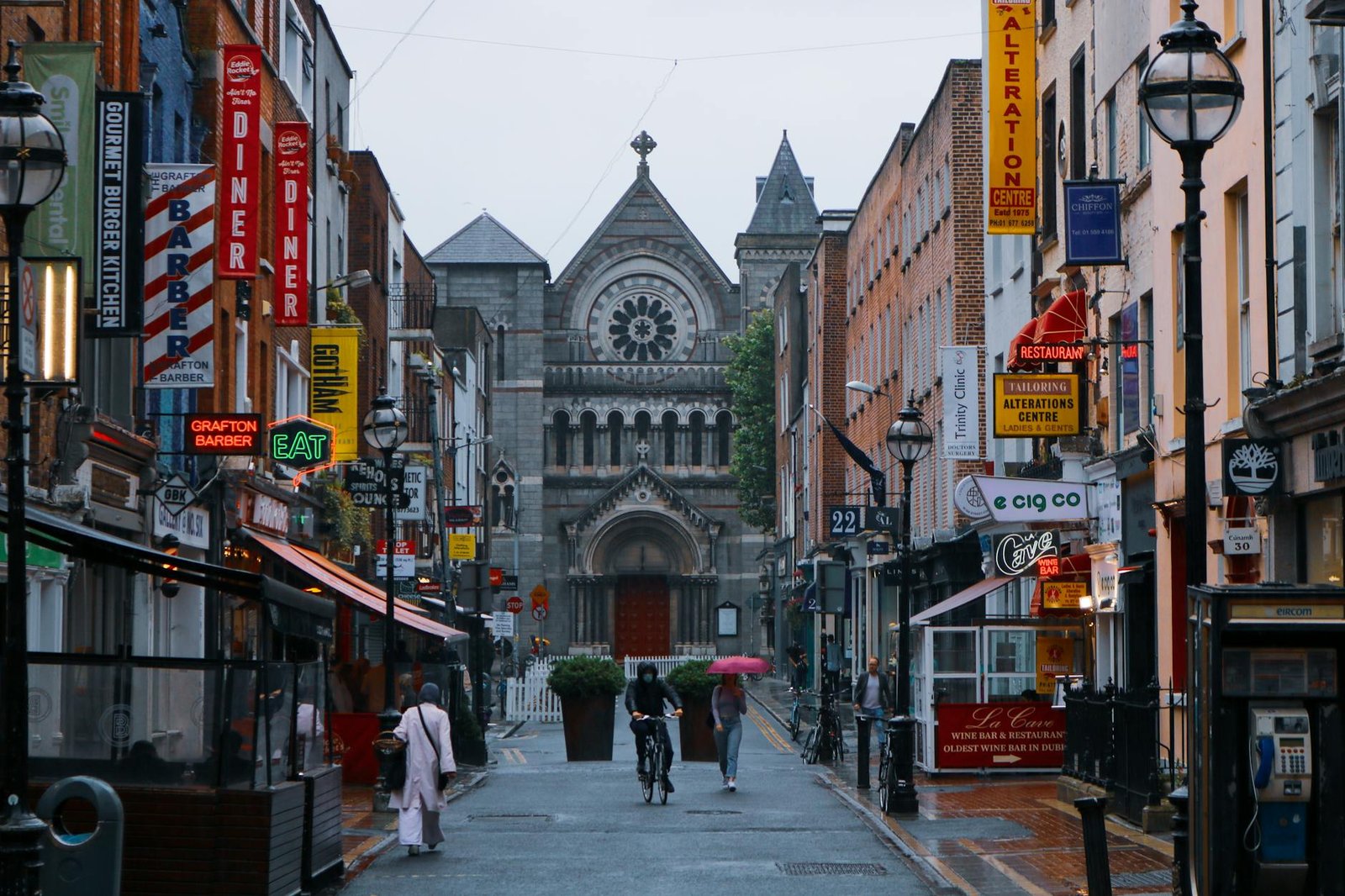
Ireland sold itself without trying. English-speaking, European Union member, common law system, full of tech headquarters, and populated by arguably the friendliest people on the continent. For Americans exhausted by domestic politics, Brits who just lost EU access, and remote workers who wanted a European base without learning a new language… Ireland was the obvious answer.
And then about 125,000 people per year started showing up. For four years straight.
The country that once exported its population by the millions is now struggling to absorb the influx, and the cracks are showing in ways that affect every expat who lands at Dublin Airport with a plan and a work contract.
The Numbers Nobody Expected
Ireland’s population hit 5.46 million in April 2025. That might not sound dramatic until you remember it was 4.6 million in 2016. Almost a million people in under a decade, in a country roughly the size of South Carolina.
Immigration drove most of it. In the twelve months to April 2025, 125,300 people immigrated to Ireland, according to Ireland’s Central Statistics Office. That was actually a 16% drop from the year before, and it was still the fourth consecutive year above 100,000 arrivals. Net migration has averaged roughly 72,000 per year since 2022, fueled by work permits, family reunifications, Ukrainian refugees, and a steady stream of international protection applicants.
The foreign-born population now sits around 23.3% of the total, according to Eurostat. Nearly one in four people living in Ireland was born somewhere else. For context, that’s higher than the United States (roughly 14%) and approaching the levels you’d see in Switzerland or Australia.
This isn’t inherently a problem. Ireland’s economy needed the workers. The tech sector was hiring aggressively, the healthcare system was perpetually short-staffed, and construction couldn’t keep up with demand (we’ll get to that). But when a country of under 5 million absorbs this kind of growth this fast, something has to give. And in Ireland’s case, what gave was housing.
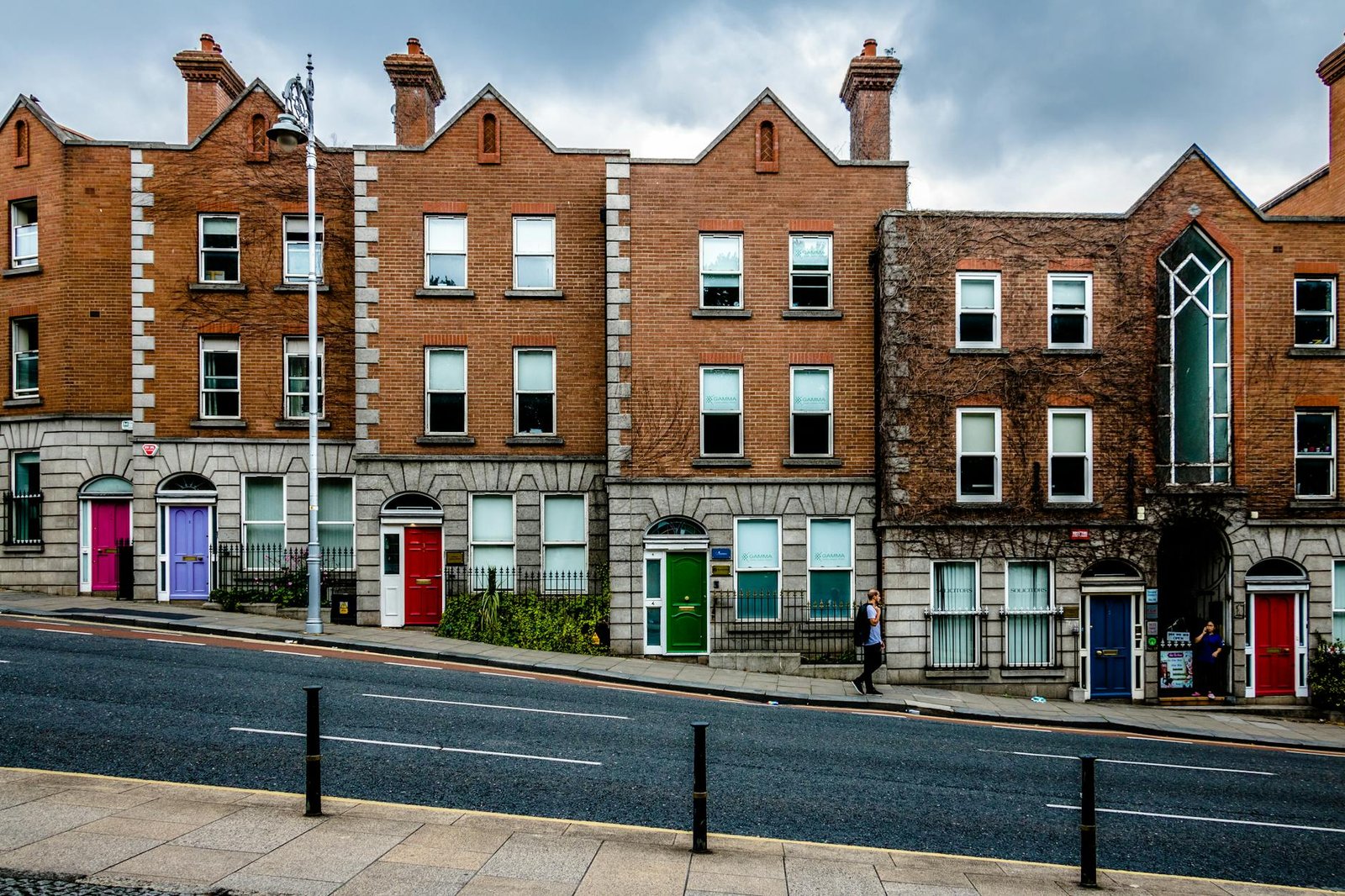
The Housing Crisis That Changed Everything
Dublin rents for a one-bedroom apartment now average around €2,500 per month. If you want to live in Grand Canal Dock (where most of the tech companies sit), you’re looking at €2,400 to €2,800. Ballsbridge? €2,300 to €2,700. Even Ranelagh, which used to feel like a reasonable compromise, runs €2,200 to €2,600.
Outside Dublin, the picture softens a little. National averages sit around €1,520 for a one-bed. But “outside Dublin” often means outside the job market, too.
The vacancy rate is what really tells the story. Dublin’s advertised rental vacancy rate hovers between 0.5% and 0.8%. In high-demand neighborhoods, it drops to 0.3%. Nationally, rental listings fell to under 1,800 in February 2026, down 22% year-on-year. When a decent apartment hits the market in Dublin, it’s gone in 7 to 14 days.
A single professional needs roughly €3,500 to €4,000 per month to live comfortably in Dublin. For families, housing alone can run €2,500 to €4,500 depending on size and location. Ireland now ranks among the top 10 most expensive countries in Europe, and Dublin sits near the very top of the city rankings.
The government knows this. Housing output is rising. But it’s rising like a slow elevator in a building that’s on fire… not fast enough, and everyone can smell the smoke.
When the Welcome Mat Gets Pulled
Ireland has historically been one of the most immigration-positive countries in the EU. Polls consistently show around two-thirds of Irish people believe immigrants should be welcomed. But those same polls now show 59% favor more closed borders, and 37% say migration is the single most important issue facing the country. Both things are true at the same time, and the tension between them is playing out on the streets.
Since 2022, Ireland has seen hundreds of anti-immigration protests. In July 2024, over 1,000 protesters gathered in Coolock in northern Dublin at a former factory being renovated to house asylum seekers. They set it on fire and injured several first responders. In April 2025, over 10,000 people marched through central Dublin in what organizers called a “National Protest.”
I’m not going to pretend this is a simple story. There are genuine far-right agitators exploiting legitimate frustration about housing, healthcare, and public services. There are also ordinary people who feel unheard and who are watching their neighborhoods transform faster than the infrastructure can handle. The spoiled ballots in recent elections (1 in 8 voters) tell you everything about where the mood sits: people are angry, and they don’t feel represented by anyone.
What this means for an expat arriving in 2026 is more subtle than you might think. Nobody’s protesting the American tech worker who just got a Critical Skills permit. The tension is directed at asylum seekers and what people perceive as uncontrolled migration. But the atmosphere is different from what it was five years ago. The unquestioning welcome that Ireland was famous for has developed conditions.
The Government Response
Dublin has been busy. In November 2025, the government announced a package of immigration restrictions specifically designed to slow the pace of arrivals.
Family reunification now comes with stricter eligibility and financial requirements. You need to prove you can actually support the family members you’re bringing over. Citizenship for refugees got harder, with the qualifying period going from 3 to 5 years, plus new “good character” and self-sufficiency requirements. Adults granted international protection can’t apply for family reunification for three years after receiving their status.
The International Protection Bill 2026 aims to process all new asylum applications within 3 to 6 months by June 2026, a significant acceleration from the current backlog.
For skilled workers, the picture is more nuanced. The Critical Skills Employment Permit remains attractive, and Ireland hasn’t made it harder to get. The General Employment Permit minimum salary increased to €36,605 from March 2026, which is modest. The government is threading a needle: slow down asylum and family migration, keep the skilled worker pipeline open.

The Tech Factor (And Its Unraveling)
For years, Ireland’s pitch to expats was essentially: come for the tech job, stay for the culture. Dublin collected European headquarters like trading cards. Google, Meta, Apple (in Cork), Stripe, Salesforce, LinkedIn… the list goes on. The Critical Skills Employment Permit was practically designed for this crowd.
Then the layoffs started.
TikTok cut 300 from its Dublin operation in early 2025 out of 3,000 employees. Intel announced plans to slash up to 20% of its workforce, threatening hundreds of jobs at its Leixlip facility. VMware lost 360 positions in Cork after the Broadcom acquisition. Workday cut 1,750 globally from its Dublin base of 1,900. And Meta plans to cut roughly 8,000 jobs worldwide (10% of its staff), with its Irish operation of 1,800 people directly in the path.
The pattern is clear and connected to AI. Companies are automating roles that used to justify work permits. The jobs that brought a generation of expats to Ireland are being restructured from underneath them.
This doesn’t mean the Irish tech sector is dying. Stripe is reportedly growing from 8,500 to over 10,000. AI is creating new roles even as it eliminates old ones. But the days of casually landing a tech job in Dublin and having your pick of employers? Those are over.
What Moving to Ireland Actually Looks Like Now
If you’re still reading and still interested (which means you’re serious), here’s the practical reality of moving to Ireland in 2026 as a non-EU citizen.
Work Permits: You need a job offer first. The Critical Skills Employment Permit requires a minimum salary of €64,000 and no labor market test. It’s your best path, leading to Stamp 4 (open work permission) after just 21 months. The General Employment Permit covers broader roles at €36,605 minimum but requires proving no EU/EEA candidate could fill the position.
Getting There: Employment permit processing takes 4 to 8 weeks. If you also need a D Visa (most non-EU citizens do), add another 4 to 8 weeks. Budget 8 to 16 weeks total from application to arrival.
Registration: Within 90 days of arriving, you need to register with immigration and get your Irish Residence Permit (IRP). Everyone over 16 who plans to stay more than 3 months needs one.
Citizenship: After 5 years of continuous residence (with 1 year continuous immediately before applying), you can apply for naturalization. Processing takes roughly 19 months, plus 8 to 10 weeks for the passport after approval. Ireland allows dual citizenship, so you don’t have to give up what you already have.
Taxes: 20% standard rate, 40% higher rate, plus Universal Social Charge (0.5% to 8%) and PRSI (4%). If you earn over €125,000 (up from €100,000 as of January 2026), you may qualify for SARP (Special Assignee Relief Programme), which offers tax relief through 2030.
Is Ireland Still Worth It?
Yes. With caveats.
Ireland is still an English-speaking EU member with common law, strong rule of law, excellent universities, and a genuine cultural warmth that, even strained, hasn’t disappeared. The tech sector is restructuring, not collapsing. The Critical Skills permit pathway to residency and citizenship remains one of the clearest in Europe. And the Irish passport is one of the most powerful in the world, with visa-free access to 190+ destinations.
But you’re walking into a country in the middle of a real identity crisis. The housing market will test your patience and your savings. The social atmosphere around immigration is more charged than it’s been in modern memory. And the “just move to Dublin and figure it out” era is definitively over.
If you come with a strong job offer, realistic expectations about housing, and the financial runway to survive Dublin rents while you find your footing… Ireland can still be an excellent move. If you’re expecting the easy, welcoming, affordable Ireland from the travel brochures, you’re going to have a rough time.
The door is still open. It’s just not as wide as it used to be.
If you’re exploring Ireland or other European residency options and want expert guidance on your best path forward, get in touch with our team. We help clients cut through the noise and build real global mobility strategies.