

Everyone’s watching Dubai. The flashy skyline, the Instagram-ready marina, the golden visa that shows up in every “five best residency programs” listicle you’ve ever scrolled past. And fair enough, the UAE has earned the attention. But while the world stares at one corner of the Arabian Peninsula, something interesting has been happening about 400 kilometers down the coast.
Oman relaunched its Golden Visa program in August 2025. No press tour. No influencer campaign. Just a quietly restructured two-tier residency framework that slots in below the UAE on investment minimums while ranking higher on quality of life. Most people in the global mobility space haven’t noticed yet. That’s exactly why it’s worth looking at right now.
What the Oman Golden Visa Actually Offers
The new program splits into two tiers: a Golden Visa (10-year renewable) and a Silver Visa (5-year renewable). The difference comes down to how much you invest.
For the Golden Visa, you need OMR 500,000 (roughly USD 1.3 million) deployed through one of seven qualifying routes: real estate in designated Integrated Tourism Complexes, ownership of an LLC, shares in a public joint-stock company, government development bonds, bank fixed-term deposits, establishing a business employing at least 50 Omani nationals, or nomination under the Foreign Capital Investment Law. The business employment route is the outlier… it requires no minimum investment at all, just the job creation commitment.
The Silver Visa drops the threshold to OMR 250,000 (about USD 650,000), with property or company investment as the main qualifying paths.
Both tiers include family. Your spouse, children, and dependent parents all fall under the same visa. No age restrictions, no limits on the number of dependents. Golden Visa holders also get fast-track immigration lanes, the right to own property outside ITC zones, permission to hire up to three domestic workers, and the ability to issue visit visas for extended family.
That family inclusion piece is worth pausing on. A lot of golden visa programs charge per dependent or cap the number of family members. Oman doesn’t. For someone relocating with aging parents and adult children, the math gets very different very quickly compared to programs that nickel-and-dime every passport in the household.
The Tax Picture (And Why the Clock Is Ticking)
This is where Oman gets genuinely interesting for a specific type of person.
As of right now, Oman has zero personal income tax. None. You could be pulling $500,000 a year as a consultant, entrepreneur, or remote executive, and your tax bill to the Omani government would be exactly zero. For people coming from countries where they’re handing over 30, 40, even 50 percent of their income… that’s not a footnote.
But here’s the catch, and it’s a significant one. Royal Decree No. 56/2025, signed in June 2025, introduced a personal income tax of 5% on annual income exceeding OMR 42,000 (around USD 109,000). The effective date is January 1, 2028. That gives you roughly 18 months of the zero-tax window if you move now.
Now, 5% on income above $109K is still incredibly light by global standards. For comparison, Portugal’s IFICI successor program taxes at 20%, Dubai remains at 0%, and most Western countries start at 20% and climb from there. Even after 2028, Oman will be one of the friendliest personal tax environments on the planet. But the zero-tax era has an expiration date, and if that’s part of your calculus, timing matters.
Corporate tax sits at a flat 15% for most businesses. Some sectors, including manufacturing, tourism, mining, and agriculture, qualify for tax holidays of up to five years, extendable under certain conditions. The petroleum sector gets hit at 55%, but unless you’re planning to drill, that’s irrelevant to your situation.
What Living in Oman Actually Feels Like
Numbers on a spreadsheet are one thing. What’s it actually like to wake up in Muscat every day?
Better than most people expect, honestly. Oman topped Asia and ranked fourth worldwide in the Numbeo Quality of Life Index for 2026, sitting behind only the Netherlands, Denmark, and Luxembourg. That’s not marketing copy from a tourism board. That’s a crowd-sourced index built from real resident data on purchasing power, safety, healthcare, climate, cost of living, and commute times.
The safety numbers back it up. Oman’s Safety Index score of 81.6 puts it among the safest countries on earth. Violent crime is functionally nonexistent. Petty crime is rare. Women report feeling safe walking alone at night, which is saying something by global standards.
Cost of living is reasonable, especially for the Gulf. A single person in Muscat needs roughly OMR 900 to 1,200 per month (USD 2,340 to 3,120) for a comfortable life… decent apartment, a car, dining out, and the inevitable air conditioning bill during the brutal summer months. If you’re willing to cook more and pick a mid-market neighborhood like Al Khuwair or Ghubrah, you can manage on OMR 600 to 800 (USD 1,560 to 2,080). Compare that to Dubai, where a similar lifestyle runs 30 to 50% higher before you even factor in the entertainment premium.
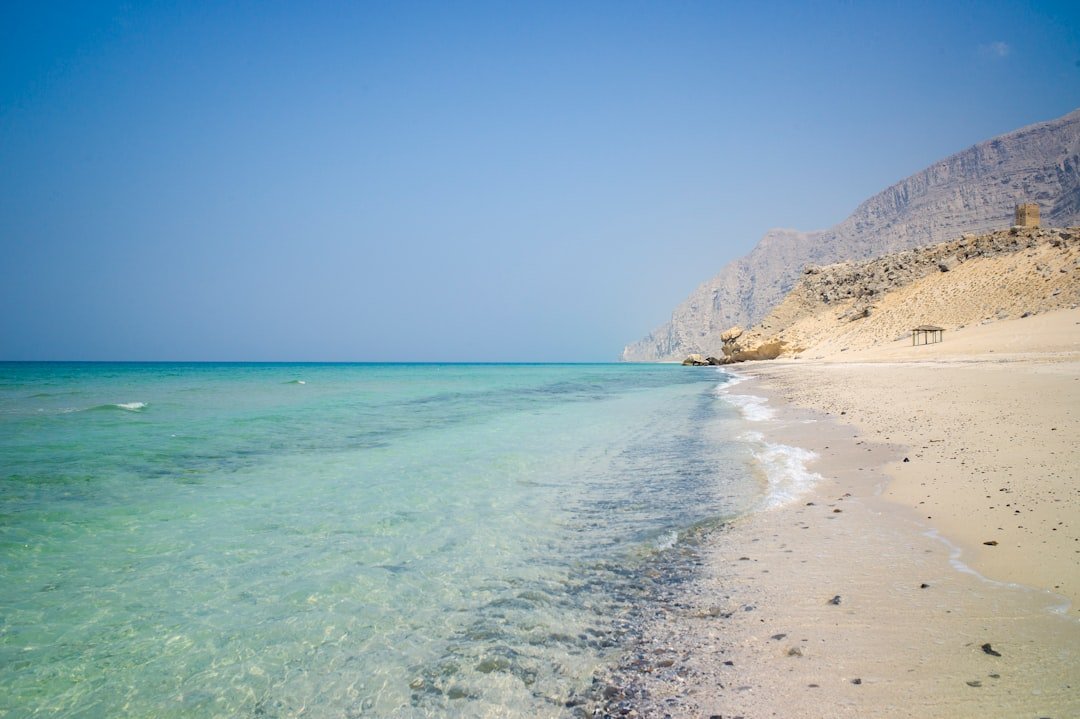
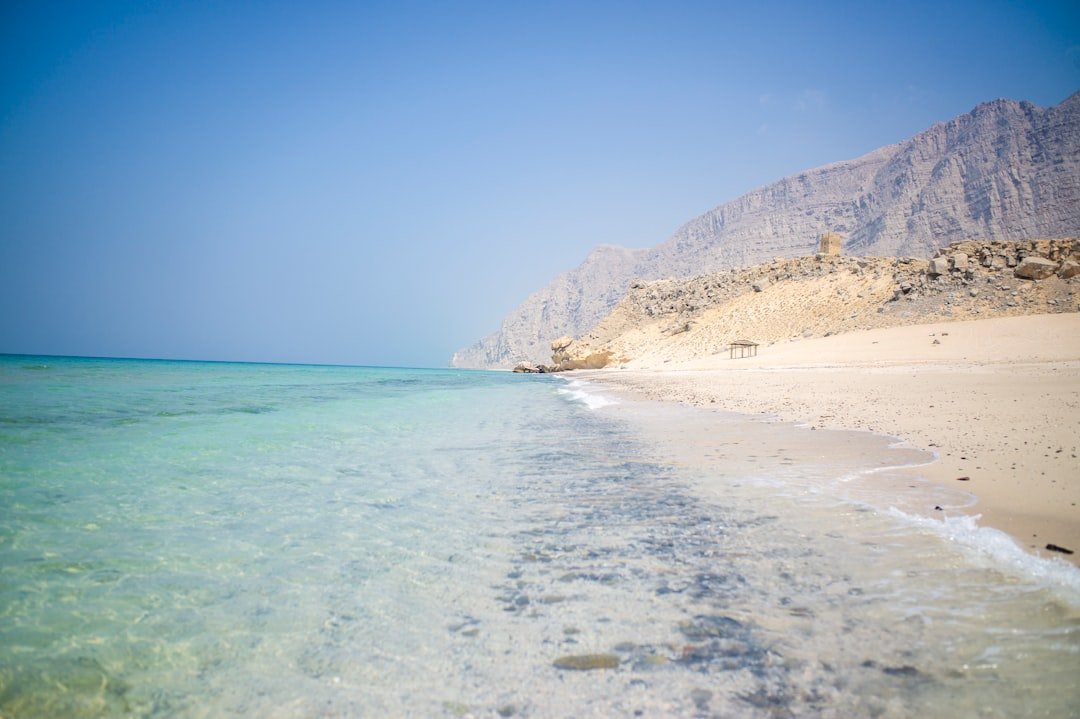
The culture is different from Dubai in ways that matter. Oman is quieter, more traditional, more rooted. The landscape is genuinely stunning: desert canyons, mountain ranges, turquoise coastline, and the kind of night skies you forgot existed. If your vision of Middle East living is all glass towers and mall culture, Oman will surprise you. It feels more like a country and less like a brand.
The expat community is smaller and more tight-knit than Dubai’s. English is widely spoken in professional settings and most service industries. International schools exist but the options are fewer than the UAE. Healthcare is functional, but for anything serious, most expats fly to Dubai, Bangkok, or home.
Vision 2040 and Why This Matters Now
This golden visa didn’t appear in a vacuum. It’s one piece of Oman Vision 2040, the country’s long-term strategy to move past oil dependence and build a diversified economy.
The numbers suggest it’s working. Foreign direct investment stock hit USD 78.78 billion by mid-2025, a 12.8% jump over the previous year. The 2020 Foreign Capital Investment Law removed minimum capital requirements and opened 100% foreign ownership in most sectors. The Oman Global Financial Centre is launching in 2026, designed to connect international capital with opportunities across the Gulf.
The Eleventh Five-Year Plan (2026-2030) prioritizes manufacturing, tourism, logistics, renewable energy, mining, food security, and the digital economy. For entrepreneurs and investors, these aren’t just buzzwords on a planning document. They’re sectors where Oman is actively offering incentives, streamlined licensing, and in some cases, multi-year tax holidays.
A new Comprehensive Economic Partnership Agreement between Oman and India is also being activated within economic zones, focusing on logistics, ports, manufacturing, IT, and renewables. For anyone positioned at that India-Gulf intersection, the timing is notable.
The Fine Print
A few things to flag before you start making plans.
Property investment for non-GCC nationals must be within designated Integrated Tourism Complexes. You can’t just buy any apartment in Muscat and qualify. The ITC requirement limits your options to specific approved developments. Golden Visa holders can own property outside ITC zones, but that right only kicks in after you’ve already qualified through the investment.
Processing costs are modest but not zero. Expect government fees of OMR 300 to 500 per person, plus OMR 100 to 150 for family members, plus OMR 30 to 50 per person for medical fitness tests and security clearance. The process runs through the Invest Oman portal, and while it’s more streamlined than it used to be, “streamlined” in Gulf bureaucracy terms still means patience.
Oman doesn’t offer citizenship through investment. This is a residency program, renewable but not a path to an Omani passport. If a second passport is part of your strategy, you’ll need to handle that through a different country. Oman covers the residency and tax optimization piece only. For passport options, you’d be looking at programs like the Caribbean CBI programs or similar.
And don’t forget the incoming personal income tax in 2028. Executive regulations detailing procedures, tax return forms, and implementation specifics are expected by June 2026. Until those drop, some operational details remain unclear. Not a dealbreaker, but something to monitor.
Who Is Oman Actually For?
Oman’s golden visa isn’t for everyone. If you want nightlife, five-star dining on every corner, and a startup ecosystem buzzing with pitch nights and co-working spaces, stay in Dubai. Oman is playing a different game entirely.
It’s for the person who values quality of life over social proof. The investor who wants Gulf-region exposure without the Dubai price tag. The family that wants safety, calm, and space over spectacle. The entrepreneur looking at Vision 2040 and seeing an economy that’s actively creating opportunities in sectors beyond real estate and hospitality.
And if you’re making the move before 2028, you get to do all of it at zero personal income tax. That window won’t stay open forever. If you’re exploring residency options and want help comparing programs, get in touch. That’s literally what we do at Flare International.
—
Immigration policies change frequently. The information in this article reflects requirements as of April 2026. Always verify current requirements with official government sources or a qualified immigration professional before making decisions.